
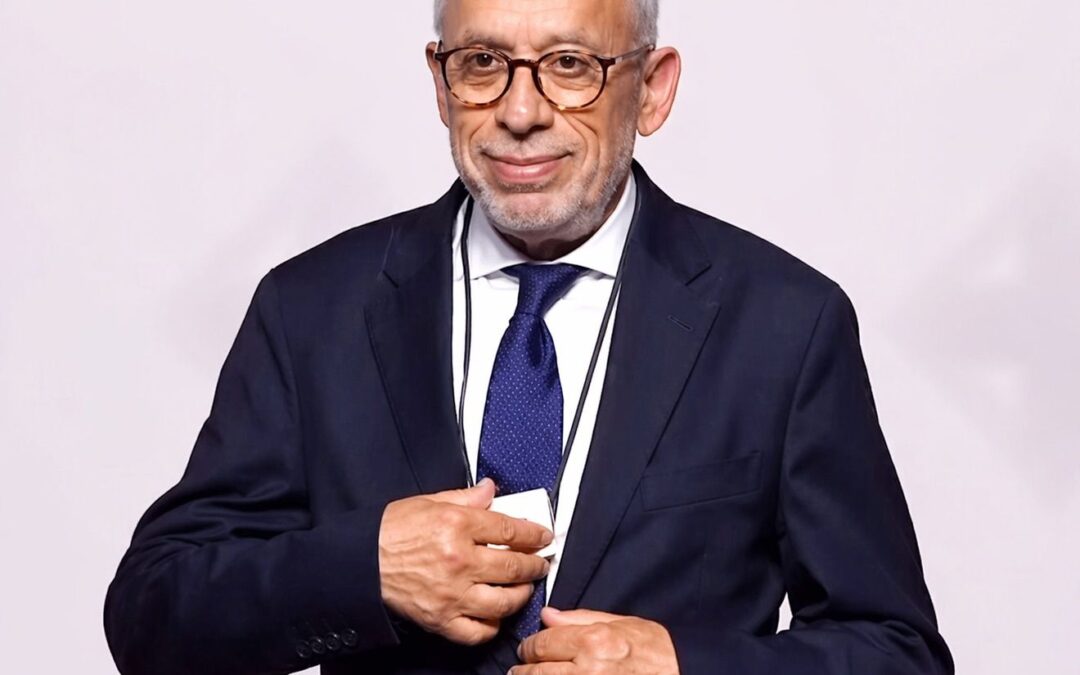
“For his career in archival science, documentary heritage and democratic memory, and for his contribution to the modernization and international projection of the Catalan archival model.” For his role in defending archives as guarantors of rights and collective memory, and for his involvement in initiatives such as Archivists Without Borders. Collected by Mr. Ramon Alberch.
Noemi Navarro, AsF Communication – This is how they announced the award of the Creu de Sant Jordi 2026 Award that you received last week. For the archival professionals of Catalonia and, specifically, for the members of Archivers without Borders, it was a source of pride for everything it means and represents. How did you feel when you found out that you would receive this distinction and on the day of the award?
Ramon Alberch – When the Minister of Culture, the Honorable Sònia Hernández called me to inform me of the award of the Creu de Sant Jordi, I was immensely moved. As a Catalan, it is a great joy to be awarded such an important award. And beyond the personal recognition, I was especially excited to think that it is also a recognition of the work of the entire collective of Catalan archivists. As for the award ceremony, I was moved to be able to share it with my wife, siblings and children, also in the company of good friends. It was an elegant, sober and solemn ceremony and even now seeing the images makes me feel a deep gratitude for this distinction.
N – It is not the first important award he has received in recent years. In 2022 he received the Fellow of the International Council on Archives, the highest distinction that this organization can grant. Therefore, a national award and an international one for what he has contributed to archival science, from here, from Catalonia, to the world. A success story that shows us and teaches us how and from where to work and what path to follow.
But when you started, what was the situation of Catalan archival research? And, prior to that, how did you decide to dedicate yourself to it professionally?
A- I come to the archives through the path of history. I did my university studies during the last years of the dictatorship (1970-1975) and at that time we saw history as a tool to recover the past and strengthen the Catalan identity, culture and language. It was when I went to the Municipal Archives of Girona to do research for my degree thesis that I realized the potential of the archives, the need for their organization and their usefulness for recovering the country’s history. From that moment on, I was clear that my vocation was to work in an archive until, in November 1978, I won the position of municipal archivist in my city.
Thus I find that there are almost no archives in good condition and with a professional at the head, except for the ecclesiastical institutions, the Archive of the Crown of Aragon and the departmental archives of the area of French Roussillon, with which I initially had a close professional relationship. In a short time I come into contact with colleagues from other Catalan towns and we realize that we need to associate to begin a turnaround. There are few archives, and those that do exist are under-equipped, with professionals struggling to learn a discipline for which there are no studies and very little bibliography. Everything has to be done – in those years the development of regional archives begins – and we throw ourselves into work with extraordinary drive and enthusiasm. And a first major milestone is the creation of the Association of Archivists of Catalonia (1985).
N- What parallel experience did you have in international archival studies and what specific need prompted you to found Archivists Without Borders?
R- From the very beginning, the archivists who came together to work in a coordinated manner were very clear that we had to learn from the best and these references were, at that time, mostly foreigners. At the state level, however, the creation of the Municipal Archives Board was important, which allowed us to establish a framework of trust and collaboration with archivists from all over the state. But, above all, at the international level, we looked to French archival science – the most advanced in those years – and the experience of Quebec. And soon we joined the International Council on Archives and began to collaborate in various committees and sections. Years to come, with Catalan archival science more consolidated and with a remarkable background, is when the sensitivity to project the principles of solidarity and cooperation at an international level in the field of human rights appeared and when, in 1998, the creation of Archivists Without Borders took place.
N- How was the creation process?
R- Arxivers sin Fronteras, as a non-governmental organization, has its roots in the cooperation projects that we undertake in Barcelona City Council from the Archives Directorate and Barcelona Solidària and that are initially exemplified in individual projects of organization of archives in Malabo, Campinas, Montevideo and Bogotá. In those years, the fall of the dictatorships in the South American cone, in southern Europe and, above all, the fall of the Berlin Wall and the collapse of the Soviet empire and the Balkan war still resonate. The resignation of Pasqual Maragall at the head of the Barcelona Mayor’s Office forced a change of vision. Until now, Barcelona City Council had shown itself as a supportive municipality – proof of this is the assumption of Sarajevo as District 11 of Barcelona – and with a great vocation to project its model, including the archival one, around the world. The active support to Sarajevo and other towns in Bosnia is exemplary, on all fronts, especially in the training of its archivists to take on the challenge of recovering and organizing a documentary heritage that had suffered significant losses during the long and bloody war (1991-2001). At an international level, the study coordinated by archivist Antonio González Quintana in his work on the State security archives in the disappeared repressive regimes was a benchmark.
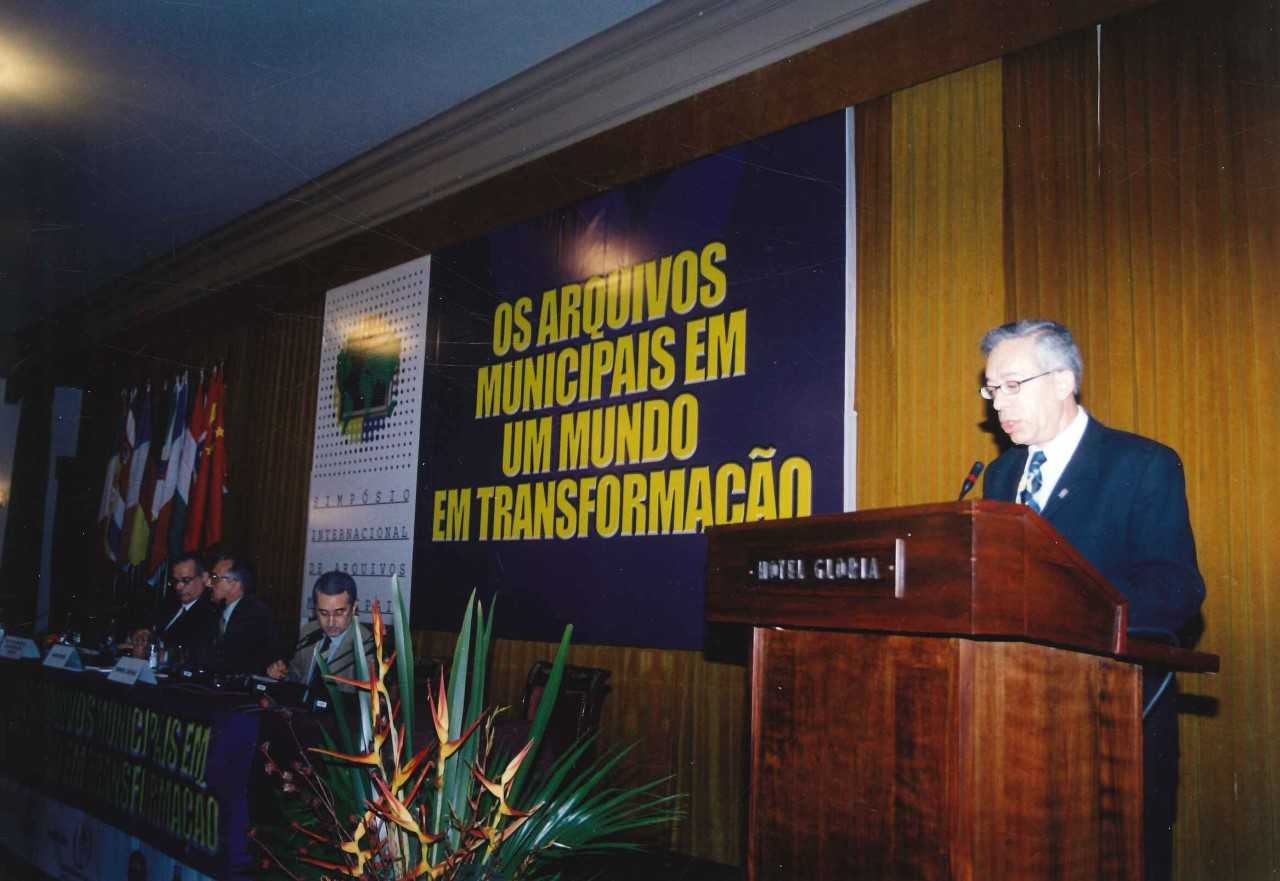 Congress Rio de Janeiro, 2002. Photograph provided by Ramon Alberch
All this and a certain inaction in this area of the International Council on Archives encourages us to take a step forward and lead a movement that over time has demonstrated its structural nature: the inseparable relationship between organized, protected and accessible archives and the defense of human rights. It should be noted that although AsF was created in 1998, the reaction of the International Council on Archives in this area is very slow: after multiple pressures they agreed to create a Working Group on Archives and Human Rights at the Cape Town Congress (2003) and it was not until the Adelaide Congress (2019) that it was finally consolidated as a specific Section. .
N- However, there are now several AsF sections around the world and recognized by the ICA. And all based on the Catalan push for archives and human rights. In fact, one of the many reasons why he has been deservedly awarded the Creu de Sant Jordi is precisely this, having founded AsF in Barcelona, in Catalonia, a very important milestone in the history of archival science. In addition, and also from AsF, projects have been carried out by and for the Casals Catalans in countries such as Cuba, Argentina, Paraguay or France.
Could you explain in what context the Casals Catalans were created, the importance of AsF’s work in them and what is their current situation?
A- The Catalan centers and centres located around the world are the living representation of Catalonia. Of the more than one hundred and twenty that appear in the Register of the Generalitat, there are very old ones such as the Societat de Beneficència de Naturals de Catalunya in Havana (1840), the Casal de Catalunya in Buenos Aires (1886), the Centre Català de Rosario (1902), the Centre Català de Paris (1903), as well as others in Chile, Uruguay and Paraguay that are also centenary. Beyond the magnificent work that Arxivers sin Fronteres is doing helping to organize the archives of some of these communities, it is urgent to carry out a collaborative institutional action to save a documentary heritage that maintains the Catalan memory in numerous countries and whose importance is not always understood by the leaders of the Catalan communities. Currently, the Generalitat has prepared a study that has allowed a diagnosis of the situation and, consequently, to plan actions to organize, protect and disseminate this documentary legacy.
N- We will soon talk about this collaborative work on the documentary heritage of the Casals Catalans on this same blog. However, in line with what you said, that the importance of archives is not fully understood, nor is society in general sufficiently aware of the democratic value they have, of the role that archives have in relation to human rights or the role they play in conflict situations.
Could you address her and explain this importance?
R- Citizens need to understand, as you rightly say, the close relationship between archives and human rights. In cases of political transitions from dictatorships to democratic regimes and overcoming armed conflicts, the principles of truth, justice, memory, reparation and guarantees of non-repetition that are defended by the United Nations can only be achieved if the documents are managed to be organized and made accessible so that they can be used in trials to restore the truth of the facts, support compensation policies (whether economic or moral) for victims and recover the memory of a recent past that must become a tool to prevent events of this kind from happening again. In short, archives and documents as a defense of rights and as an instrument of legal security.
N- I explained earlier that AsF was born during the Balkan Wars (1991-2001). The association itself carried out volunteer work in Sarajevo and Banja Luka. Twenty-five years later, the last phase of the Israeli genocide against the Palestinian people or the military conflicts initiated by the United States in Iran, for example, continue to leave desolate images. Faced with these crimes against humanity and this violation of human rights without any international organization (not even the UN…) seeming to be able to do anything,
What role should archive professionals, represented, in some way, by the ICA, and associations like AsF, have in this context?
A- One of the problems with the ability to generate a consensual response to the aforementioned war situations and denounce the abuses and also the intentional destruction of archives is the lack of unanimity with how it should be carried out. Entities linked to UNESCO, such as the ICA, are very cautious, sometimes too cautious, in not interfering in the decisions of states since they believe that it could be conceptualized as a partisan political position. On the other hand, non-governmental organizations, such as the AsF, are more forceful in denouncing these situations and often issue statements aimed at drawing the attention of the international community. Another thing is that in these wars geostrategic matters are clarified and documents, and even human lives, sometimes you have the feeling that they are “collateral damage”.
N- From your experience, could you advise us on priorities and steps to follow?
A- The first issue is to join forces and generate coordination and collaboration mechanisms. AsF already does this to the extent that, through AsF International, it issues guidelines and recommendations that are followed by its fifteen territorial organizations located in Europe, Africa and Latin America. But there are other entities of a different nature, such as Memoria Abierta from Argentina, the National Security Archive at George Washington University, ADABI from Mexico or Witness, with which it would be necessary to create a joint platform that allows greater visibility and, above all, increases the communicative and influential potential. Secondly, it is necessary to work more closely with the ICA in order to increase the awareness of archivists around the world about this issue.
N- I totally agree. We can see his expertise in his advice, and as everyone knows, or has seen in our interview, his career is excellent. From this point of view, could you explain to us how your vision of archival science has evolved from its beginnings to now?
R- In the beginning, the vision of archives was based on an exclusively historical perception, understood as an instrument of identity and memory. And this was logical given that in the Catalan case we were emerging from a dictatorship and the yearning for democracy was inextricably linked to the recovery of the language, culture and history that had been kidnapped from us for forty years. However, from the eighties onwards, interest in the treatment of administrative archives, understood as part of the life cycle of documents, also grew, and there was a notable boost in document management. This evolution has strengthened the methodological components and has established archival science as a science. .
N- How would you define the current state of Catalan archival science and what are the major challenges facing the discipline, both nationally and internationally, taking into account that the world is increasingly digitalized?
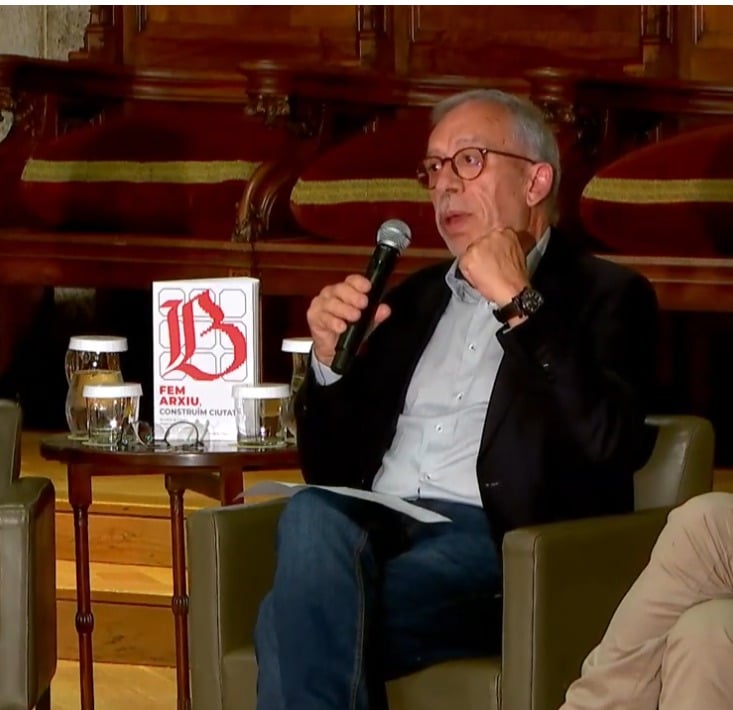
Presentation of the book, We Archive, We Build the City. 2025. Photo courtesy of Ramon Alberch
A- There are many challenges that we have to face. ntar and if I were to make a list it would be endless. To put it in synthetic terms, I would say that archival science is currently connected to the execution of the most innovative political agendas (transparency, access to information, memory recovery, data exploitation, intense use of technologies) so that as a science it is dynamic and in continuous transformation. And this is reflected in the periodic need to update university study programs. At the same time, there are two challenges that must be considered as priorities: firstly, how to ensure the long-term sustainability of huge volumes of information increasingly generated in digital support with the costs and expertise that this implies. And also how we will guarantee that what we preserve is not only institutional history and that we are capable of gathering private and community funds that must allow us to achieve a documentary heritage that is a reflection and mirror of society.
On a more conceptual level, I believe it is necessary to start a debate on how we should understand and project the profession. The almost monopolistic dedication to documentary management – otherwise very necessary – has gradually left in second place the part that we could call historical-cultural, that is, cultural dynamization with all the typology of activities, educational services, etc. I assume and at certain times I have had to do it too, that we devote ourselves to documentary management that makes us useful and visible within organizations. But we also have to work on dissemination to the extent that it projects a certain image to society. We cannot complain that citizens do not know what we do if we do not do archival marketing. The DNA of archives is a synthesis of both functions and we need to debate how to reflect this in work and also in training.
N- We have already commented on this before, but I would like to emphasize the latter to reiterate the agreement of opinion here: we need to vindicate archival science more, as a voice and discipline, to make society understand what we are and do (also as document managers) and, therefore, to vindicate the profession itself.
That said, what would I say to political leaders, knowing that they are the ones who end up making the final decisions about the resources that are provided to our archives and that, therefore, they are the ones who determine the state and situation of the country’s archives and archival science and its professionals in the country?
R- I would tell you that Investing in archives is a commitment to efficiency, effectiveness, productivity and legal certainty. And, above all, it is an investment in the future. An agile and transparent administration is not possible without well-organized archives, with adequate human and technological resources and sustainable infrastructures. But above all, and this reflection is aimed at the professional community, we need to claim a central position in the organizational charts and hierarchical structures of organizations and, especially, be good communicators and educate about our work and the benefits it brings to the organization and to society. .
N- And vice versa, what would you say to the archivists who are at the forefront of everything currently?
R- I would reiterate that we must be good communicators, do marketing and send positive messages aligned with the needs of the organization. Also, given the avalanche of innovations and “new things” that appear continuously, we must be able to distinguish what is essential from what is accessory. We cannot claim to be experts in everything, so we must know how to assess which technological and methodological advances best fit with the social function of our organization. We must know how to lead interdisciplinary groups, as our profession is increasingly plural in terms of functions and skills.
N- Taking advantage of the fact that we are interviewing a great teacher, and following this line, what advice would you give to someone who is considering dedicating themselves to archival science?
R- For anyone who wants to work in archival science, the first piece of advice is to try to get professional training, given that there is currently a good offer of training, especially from the UAB’s School of Archival Science. But, above all, to have a great passion for archives. Few professions can offer such a wide range of possibilities, from document management in all its multiplicity of fronts to cultural dynamism and dissemination.
N- Throughout the interview, you have been referring to human rights in relation to archives, of course we do it from AsF. You have also commented, when talking about your professional beginnings as a historian and as an archivist, that at that time, in the seventies and eighties, you saw these disciplines as “a tool to recover the past and strengthen the Catalan identity, culture and language that forty years of dictatorship had hijacked”. Taking into account the current context, in which the Catalan identity, culture and language are worse than then, and that linguistic rights are also human rights, I would like to ask you a question or start a debate: what role should we archival professionals in the Catalan Countries have in the face of the continuous contempt and attacks on these fundamental rights?
R- First of all, to confirm that linguistic rights, as an essential part of a people’s identity, are certainly human rights that must be respected and defended. That said, I think that, in general, the profession maintains great loyalty to our language. Another thing is what role we can play in being active in its defense beyond our personal positioning. I see several possibilities: one, which is succeeding, is that all the methodological and technological tools that we use – and this is what our group is doing – are in Catalan. Secondly, to take advantage of the immense possibilities offered by documents for their use as pedagogical resources. At the level, especially, of primary and secondary school students, the use of all types of textual, graphic and image documents for teaching in the social sciences should be part of our priorities. There are several archives -especially municipal- that have exemplary dissemination projects at school and citizen level and that have allowed them to achieve splendid results. Beyond the social chatter, which does not go our way in the linguistic aspect, we have a very fertile field of work where, from the beginning in school, the language is an instrument for assuming Catalan identity.
N- I know there must be many, but could you share with us any AsF experiences that have left a personal mark on you?
A- An experience that deeply affected me was in Sarajevo in October 2002 on the occasion of a training stay aimed at Bosnian archivists. I took advantage of some free time to visit a neighborhood whose houses had been completely demolished by the Serb bombings. There were people sitting on the rubble in a thoughtful attitude, with their eyes lost. When I asked what they were doing there, the person who was accompanying me explained that they often came to see if they could find any acquaintances who had lived there before the war and who could testify that those ruins had once been their home. The planned destruction of municipal, parish, property archives, etc. by the Serbs had left many people without personal identification documents or property. Basically, they had taken everything from them. They were people without written memory and without a home. And at those times, a case like this reinforces the importance of preserving documents from intentional destruction that seeks to perpetuate memoricide and the impunity of the aggressors.
N- If you had to summarise your career or work in one idea, what would it be?
R- Working in archives has aroused in me a great passion for “building”, that is, participating in the awakening and progress of my country from an archival perspective, contributing to saving the heritage and helping to create infrastructures that guarantee its preservation and access. I understand it as a patriotic task that goes beyond the mere performance of a job for which you are financially compensated. I would like the new generations of archivists to be able to value the work done since the arrival of democracy when archives were not considered and we were a profession lacking in trajectory and prestige. And that it has been necessary to “break a lot of ground”, not always in favorable conditions, to achieve a standardised profession.
N- From here I thank you for all the work you have done and for being a reference for those who have come after us. And now, that you can look back, what makes you most proud of this trajectory and what would you like people to remember about your work?
R- I would like it to be remembered that I have dedicated my entire life to taking on very exciting challenges both at an institutional level – the impetus of the Archives of Girona, of Barcelona, the management of the archives of the Generalitat – and of an associative nature – participation in the creation of the Association of Archivists of Catalonia, of AsF – as well as the creation of the School of Archival and Document Management of the UAB. In all cases my desire has been to contribute to providing the country with archival, educational and associative infrastructures that would reveal the importance of the profession. And to do so by creating good work teams, with prepared and committed people. Also my teaching work for more than forty years throughout Ibero-America, where I have been able to combine two of my passions: archives and travel.
N- Finally, a message for the archival community and for any citizen who reads us: why is it important that everyone could collaborate or participate in some way in Archivists Without Borders?
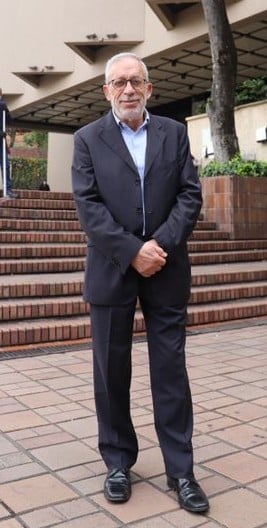 Photo courtesy of Ramon Alberch
R- As I have already made clear throughout the interview, archives are much more than spaces for storing documents. And among their functions, the defense of human rights is certainly the one that brings the most benefits, in every sense, to society. Collaborating and supporting AsF is visualizing the will to contribute our grain of sand in the construction of a more just and supportive world.
Noemi Navarro Espada
Communications Officer
Recent Comments