
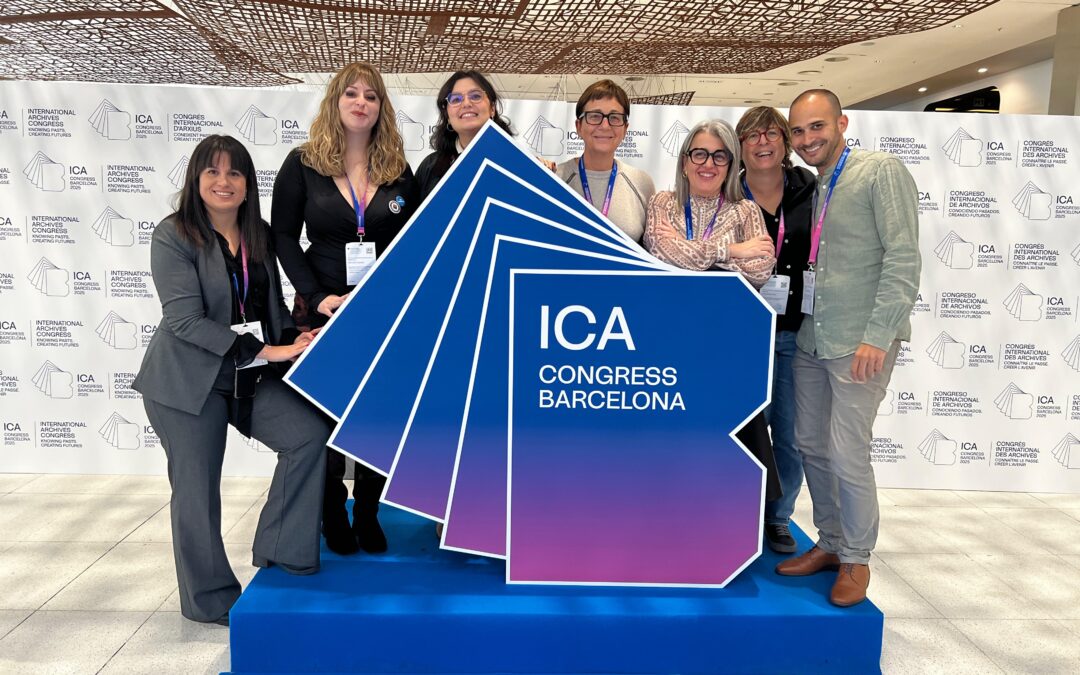
Last Thursday, October 30, the International Archives Congress 2025, held in Barcelona, closed its doors. It has been four intense days full of exhibitions and talks by professionals from all over the world, an enriching experience that has allowed us to discover initiatives and learn about inspiring projects from the world of archives on a global scale.
AsF has participated with different proposals that have included:
- The preservation of the identity of the SADR through the processing of documentation deposited in the National Archives. A project that gains more strength after the UN Security Council’s endorsement of Morocco’s Plan for Western Sahara.
- The application of collaborative methodologies that favor dialogue between the State and communities, with the aim of building policies that guarantee the protection and dissemination of this documentary and testimonial legacy .
- The presentation through posters, a more personal and interactive formula to publicize the projects. In this sense, the documentation of the Casals Catalans and that of the Amazigh people have allowed us to show, in a more intimate and informal way, how memory is worked through archives.
Another highlight for AsF has been the presence of its own stand , from which we have been able to make the association known in different parts of the world. We sincerely thank the Congress organization for this deference to an entity that makes cooperation in the archival field its main value.
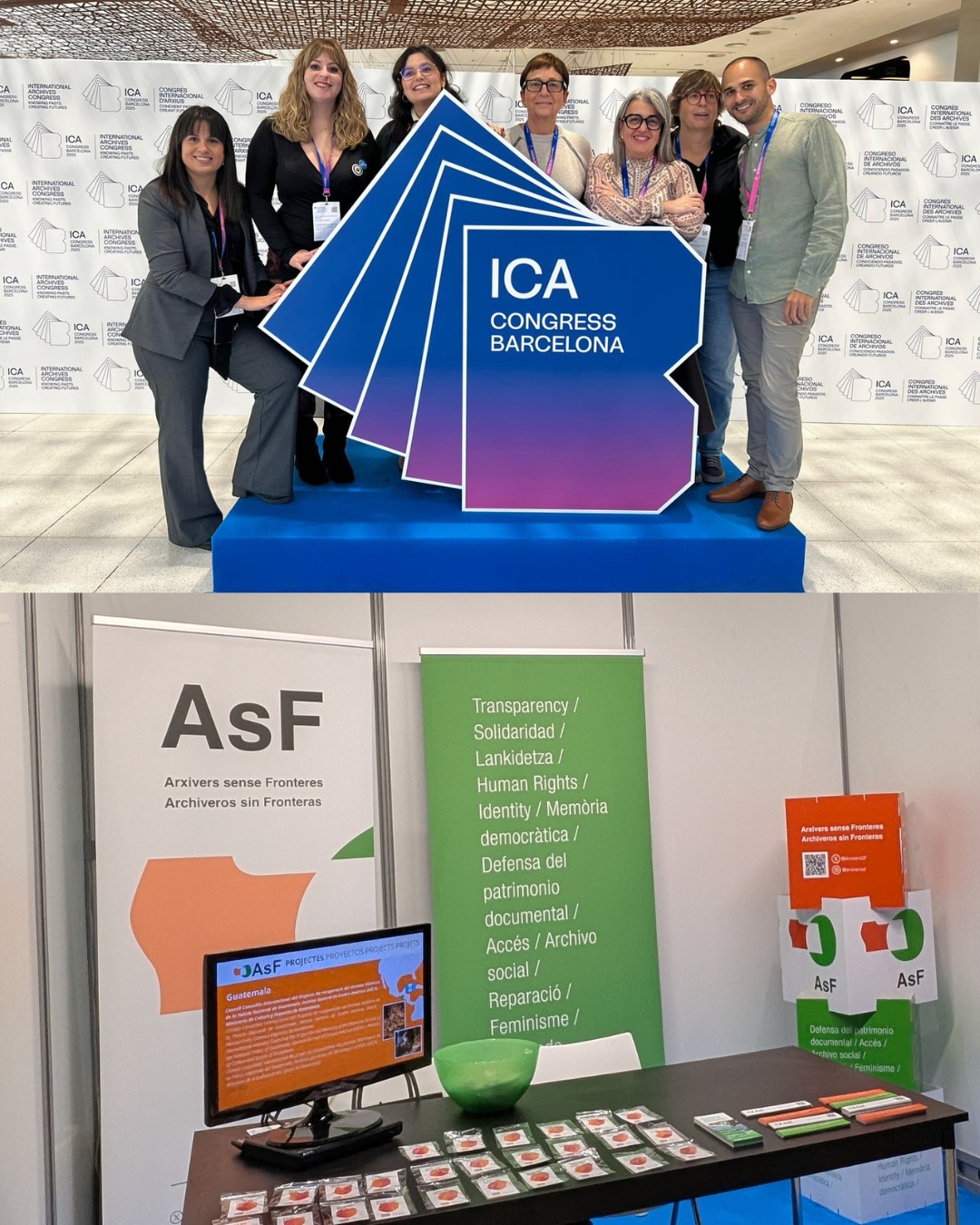
This visibility has allowed us to incorporate ten new partners, arouse the interest of individuals and companies who have approached us to learn more about the ongoing projects, and establish new alliances that we hope will serve to promote future programs and actions.
It has also been very satisfying to meet in person with members of other AsF sections —such as France, Colombia, Uruguay and Norway— with whom we share common objectives, mission and values.
Regarding the Congress program, we were able to attend fully current sessions, focused on issues such as human rights violations resulting from the wars and invasions affecting Ukraine and Gaza, as well as debates on the future of the archival profession and innovative proposals that put data at the center as a transformative element.
The International Archives Congress 2025 has been a fundamental space for reflection and dialogue to delve deeper into the role of archives as guarantors of collective memory. and human rights. The different presentations and shared experiences have shown that, beyond their administrative value, archives are living instruments for truth, justice and reparation.
The debates on displaced archives and conflict contexts have highlighted the need to promote international policies that ensure their preservation and return, while the sessions dedicated to digitization and accessibility have highlighted the challenge of adapting to new technological environments without losing sight of the possibility of expanding access to all audiences .
The importance of guaranteeing access to information , especially for communities affected by violence or exclusion, and of reinforcing the role of archival professionals as active agents in the defense of collective memory, has also been highlighted.
In short, the congress has consolidated the idea that archives are spaces of resistance, memory construction and rights promotion , and has opened new avenues of collaboration to continue moving towards more inclusive, open and committed management with society.
Recent Comments