
Archivists without Borders signs a collaboration agreement with the FUAB Training School.
Last Tuesday, June 4, 2024, the FUAB School of Archival and Document Management Training signed a collaboration agreement with the Association of Archivists Without Borders – Spain (AsF) within the framework of the International Archives Week. The FUAB School of Archival and Document Management has as its priority objectives the implementation of archival studies, consisting of an official university master’s degree in archival and document management of the second cycle, third cycle training for the training of specialists and/or experts, as well as the development of research and consultancy functions in the field of archives.

Through this agreement, AsF and FUAB want to collaborate in the training of people in archival matters, document management and information and data governance in the field of archival cooperation and activism. Likewise, both entities also want to collaborate in the realization and dissemination of events, conferences, projects and other activities that are developed, whether promoted jointly or individually.
As a result of this collaboration, a specialization course in Archives, Human Rights, Gender and Diversity will be held during the 2024-2025 academic year. This course, with a total of 4 credits or 100 hours, will have a reduced cost thanks to the joint commitment of the Escola FUAB Formació, AsF and the teaching staff. In addition, people associated with AsF will receive a large discount, this being the highest discount for groups with the aim that all people can train in the field of archival science, human rights, gender perspective and diversity.
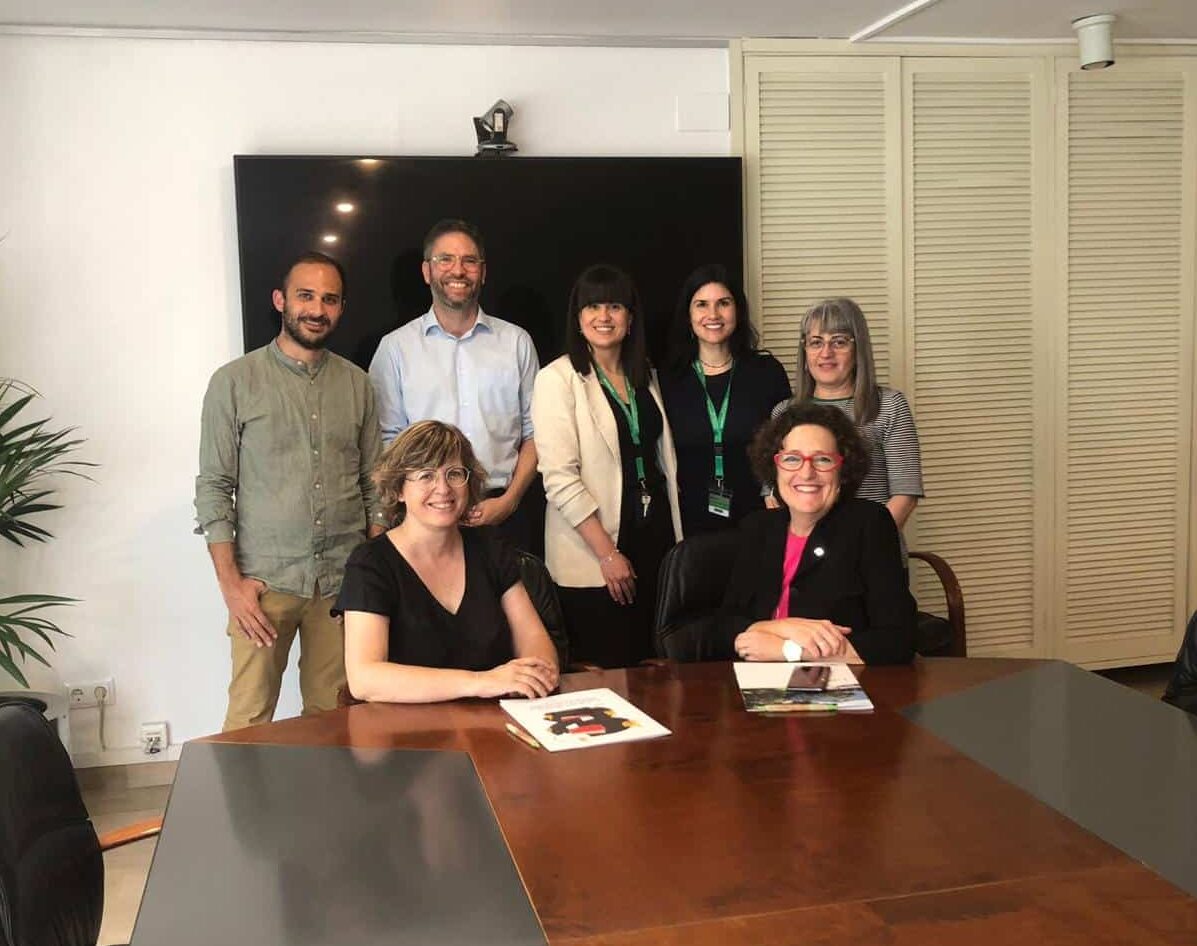
As part of this event, we asked the director of ESAGED, Joan Pérez Ventayol, about this:
AsF: What is the importance of collaborating with Archivists Without Borders (AsF)? Why do it and why now?
Joan Pérez: The School has a tradition of collaboration with entities and centers linked to the country’s archives and beyond. It has always had a vocation to link and relate to the territory, and this obviously implies archive centers, but also companies and entities or organizations. And AsF It is an organization that was born in the country 25 years ago with which it has always collaborated but this collaboration had never been formalized, until now. It is like a procedure to officialize a relationship that has been in place for a long time.
AsF: What are the main objectives of the agreement between the FUAB Training School and Archivists Without Borders?
Joan Pérez: Basically, to formalize, as the relationship between the two entities said, but at the same time, to specify this collaboration in specific actions, such as training people in archival matters, document management in the field of cooperation and archival activism. But also the realization and dissemination of events, conferences, projects and other activities that are developed jointly or individually.
In terms of training, the agreement is specific to offering joint training in the field of archives, human rights, gender and diversity, which challenges both entities through the expertise on the territory that AsF has and the possibilities of teaching methodology of a university course that the School has. It is also planned that in order to reach a much wider interested public there will be discounts for AsF members.
AsF: Why do training linked to the Archives in Human Rights, Gender and Diversity?
Joan Pérez: Archival studies is a discipline with a very large social impact, because people themselves and any human group generate documents and information, whether they want to or not. But traditionally archival studies has focused on the treatment of the archives of large centers of power (companies, administrations, governments, states), and the diversity and complexity of societies were not taken into account. Now, however, there is a much greater awareness that preserving social memory is as important or more important than the memory of groups in power. And this is where minority, marginal, invisible, non-hegemonic groups, etc., or those that have not been present in the major narratives, come into play.
We believe that training in this area, linked to the attention to preserving the memory of human rights and gender and sexual and emotional diversity, is absolutely necessary to raise awareness and provide tools for archival treatment and preservation of this collection.
AsF: What differentiates it from trainings focused on the same area or topic?
Joan Pérez: This joint training that we propose, although it already has some precedents in the School’s training offer, is completely renewed in terms of the contents offered, the new lines linked to the treatment of the so-called social archive and a new teaching methodology. In fact, this will surely be one of the first trainings that will be based on the innovative teaching methodology called Flipped Learning , which is characterized by a learning that is the opposite of traditional. Knowledge is acquired outside the classroom, and in class what is done is to put it into practice based on problem solving, case studies and complex practices that are solved with the previous knowledge learned outside the classroom.
AsF: Are possible avenues for future collaboration being discussed?
Future avenues of collaboration can be many and varied. Giving relevance to projects to safeguard funds at risk, the possible participation of students from the School in these projects, and the normalization and awareness of social diversity through archives and training.