Archives on the front lines, protecting memory in uncertain times

Archives on the front lines, protecting memory in uncertain times

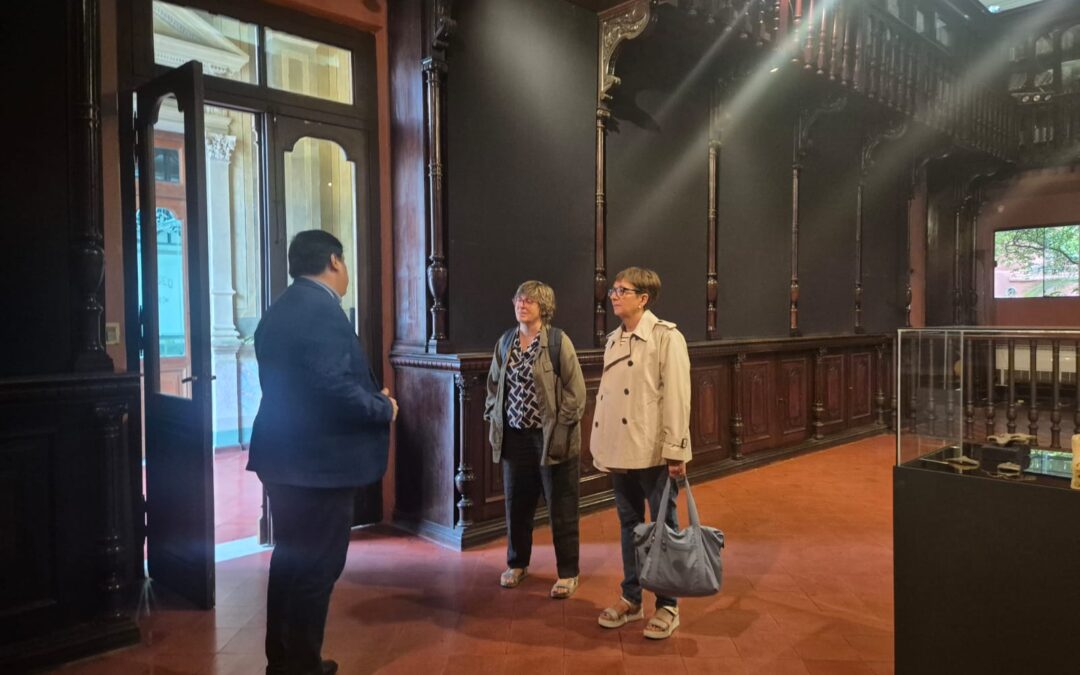
Pepita Raventós, head of the Archives and Document Management service at the University of Lleida, reflects on the event held during International Archives Week and jointly organized by the University of Lleida, the National Archive of Catalonia and Archivists Without Borders.

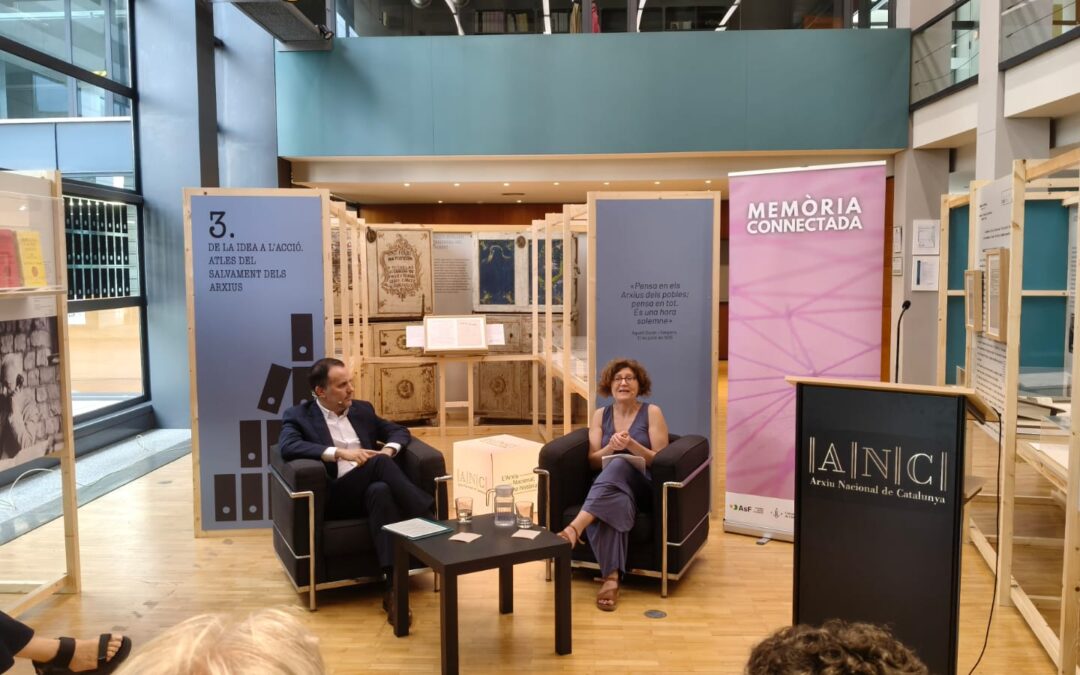
The conversation “Connected Memory”, held on June 10, 2026 at the National Archive of Catalonia and jointly organized by Archivists Without Borders, the National Archive of Catalonia and the Archives and Documents Management of the University of Lleida, offered a particularly timely reflection on the value of archives in contexts of conflict, vulnerability and the reconstruction of memory.

Carlos Serrano, ALIPH Program Director, emphasized the protection of documentary heritage against wars, catastrophes, and deliberate destruction. Without going into the detailed analysis of each case, the conversation presented the situation in several conflict zones where archives and other memory institutions suffer irreparable damage. His intervention reminded us that protecting archives is not an exclusively technical issue: it means preserving rights, identities, and evidence essential to communities.

Sílvia Marimon, a journalist specializing in historical memory, provided a complementary and, at the same time, critical perspective: documents do not fully acquire meaning if they are not interrogated, contextualized and explained. Preserving them is essential, but so is making visible the stories they contain, especially those that have been silenced or sidelined by dominant narratives.

The dialogue between both perspectives made it clear that protection and dissemination are not separate objectives. Archives must survive, but they must also speak. Only in this way can they become active spaces of justice, knowledge and collective responsibility.

This responsibility challenges both institutions and professionals: it is not enough to simply safeguard documents, but it is also necessary to guarantee their access, understanding and transmission to future generations. At a time when disinformation, forgetting and destruction threaten collective memories, archives become an essential democratic infrastructure.
Experiències d’Arxiu a la República de Paraguai

Experiències d’Arxiu a la República de Paraguai

Mario Omar Fernández  ––

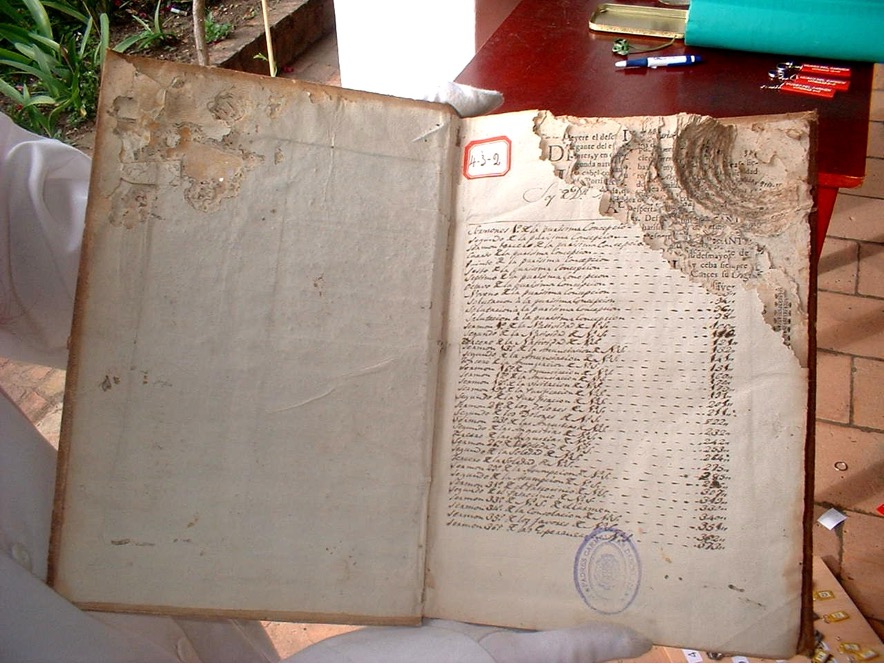
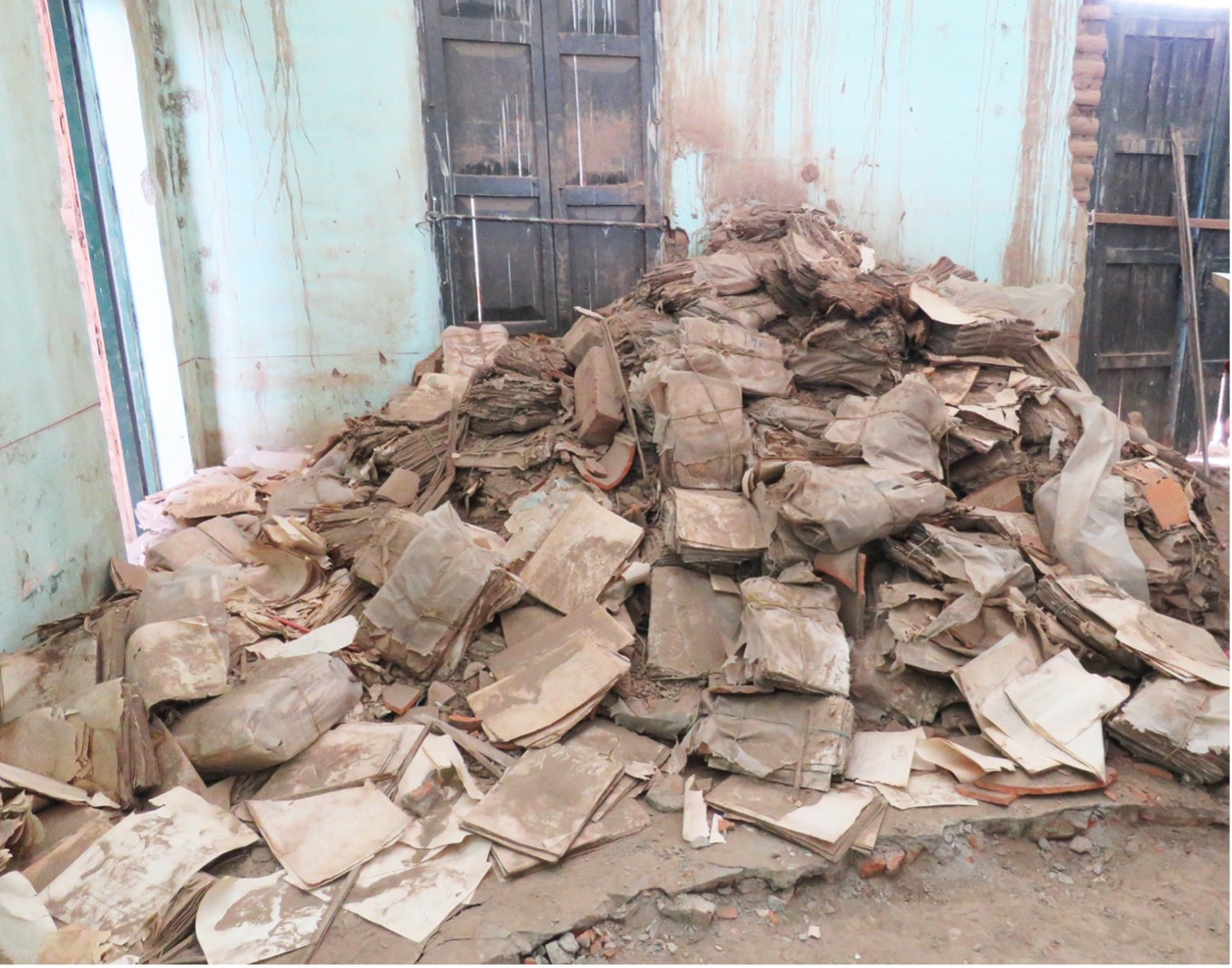
Archivo en avanzado estado de deterioro. Colombia 2016. Por Mario Omar Fernández

Durante décadas, una estrategia para preservar el patrimonio ha priorizado el control de factores como la humedad, la temperatura o la iluminación en las instituciones que atesoran colecciones patrimoniales. La conservación preventiva se ha establecido así como una de las estrategias fundamentales para prevenir el deterioro desde su origen. Museos, archivos, bibliotecas e iglesias han adoptado gradualmente protocolos, procedimientos de monitoreo y mejores prácticas para estabilizar materiales y extender la vida de artefactos y patrimonio cultural. Pero esto es solo parte de la respuesta, y aunque sigue siendo necesario, ya no es suficiente. El entorno en el que se registra el patrimonio ha cambiado profundamente. La situación actual, llena de incertidumbres, complejidades y diferentes amenazas, no implica solo gestionar factores ambientales, sino también comprenderlos y tomar decisiones informadas a partir de ellos.

Este desafío es claramente visible en América Latina, donde el patrimonio cultural enfrenta limitaciones estructurales, como financiamiento insuficiente o instituciones frágiles, junto con amenazas constantes, tanto naturales como antropogénicas: inundaciones, terremotos, incendios, vandalismo, negligencia, estrés urbano y agitación política. A esto se suma la debilidad de los sistemas de gestión, a menudo obsoletos, así como la falta de mantenimiento de inventarios y documentación. En ambos casos, estos factores pueden conducir a pérdidas irreversibles, incluso sin mediar un desastre evidente. Esto significa que la conservación ya no puede entenderse únicamente como un proceso técnico de estabilización física. Es una decisión, y cada decisión implica considerar alternativas, cursos de acción y responsabilidades.

Aquí es donde entra la gestión de riesgos y transforma el paradigma. Desde una perspectiva patrimonial, no es solo una herramienta complementaria, sino un enfoque fundamental para identificar qué puede suceder, con qué probabilidad y cómo afectaría a los bienes culturales. La gestión de riesgos es una herramienta adaptada al campo del patrimonio cultural por instituciones como el Instituto Canadiense de Conservación y el ICCROM, a partir de la norma internacional de gestión de riesgos ISO 31000.  Además, permite evaluar los riesgos entre sí, lo cual resulta clave en contextos con recursos limitados. Su principal aporte es ampliar la definición de riesgo: no se limita a eventos catastróficos, sino que incluye procesos graduales y acumulativos, a menudo invisibles.

El deterioro progresivo debido a condiciones inadecuadas, el uso incorrecto de materiales, la falta de mantenimiento o la pérdida de información también constituyen riesgos significativos. Estos riesgos silenciosos pueden generar pérdidas importantes a largo plazo. Por ejemplo, un archivo histórico sin un inventario actualizado puede conservar documentos en buen estado material, pero presentar un alto riesgo de disociación: la pérdida de información sobre su ubicación, contenido o procedencia. Como resultado, los documentos se vuelven inaccesibles o ininterpretables. No desaparecen físicamente, pero pierden su significado y valor.

Estas circunstancias obligan a replantear prioridades. ¿Es más importante invertir en control climático o en la organización documental? La respuesta depende del análisis de riesgos específico de cada caso.Una de las principales fortalezas de este enfoque es que permite comparar y priorizar riesgos. Asimismo, establece criterios claros para relacionar costos y beneficios. No se trata solo de aplicar medidas técnicamente adecuadas, sino de identificar aquellas que resulten más efectivas con los recursos disponibles.

Documento afectado por biodeterioro. Colombia. Por Mario Omar Fernández

Esta perspectiva es especialmente relevante en América Latina, donde los presupuestos suelen ser limitados, ya que integra dimensiones técnicas e institucionales. Sin embargo, su implementación presenta desafíos. Implica un cambio cultural dentro de las instituciones: pasar de una lógica normativa y procedimental a otra basada en el análisis, la comparación y la toma de decisiones informadas. Este cambio puede generar resistencias, especialmente donde predominan prácticas tradicionales. Además, requiere capacitación especializada y herramientas técnicas que no siempre están disponibles.

La evaluación de riesgos considera la probabilidad, el impacto, la magnitud de las pérdidas y la eficacia de las medidas adoptadas. Para ello, se necesita experiencia y acceso a información confiable sobre las colecciones, algo que no siempre está garantizado.

Cabe señalar que la gestión de riesgos no elimina la incertidumbre, sino que opera dentro de ella. No ofrece certezas absolutas, pero sí un marco para analizar la complejidad y tomar decisiones fundamentadas. Su valor radica en preparar a las instituciones para actuar de manera reflexiva y estratégica. Diversas iniciativas en América Latina, impulsadas por redes regionales, universidades y organizaciones internacionales, han comenzado a integrar estos enfoques en museos, archivos y sitios patrimoniales.

Estos esfuerzos han demostrado una mayor eficiencia en el uso de recursos, el fortalecimiento de capacidades institucionales y la promoción de una cultura de prevención a largo plazo. No obstante, la gestión de riesgos debe entenderse como parte de una reconceptualización más amplia del patrimonio. Los bienes culturales no son independientes, sino que forman parte de sistemas interrelacionados de carácter material, social, económico y político.

Por ello, la conservación preventiva y la gestión de riesgos no deben verse como enfoques excluyentes, sino complementarios e interconectados. La conservación preventiva sigue siendo fundamental, pero necesita integrarse en un marco que permita priorizar, comparar y decidir. A su vez, la gestión de riesgos encuentra en la conservación preventiva las herramientas concretas para abordar los riesgos identificados.

En definitiva, este enfoque conduce a una reflexión esencial: conservar no es solo cuidar, sino decidir. Decidir implica asumir responsabilidades, reconocer límites y ejercer criterio. En un contexto incierto, la conservación del patrimonio no puede limitarse a reaccionar ante la pérdida, sino que debe anticiparse a ella.


9th ANNUAL CONFERENCE OF THE INTERNATIONAL COUNCIL OF ARCHIVES (ICA)

9th ANNUAL CONFERENCE OF THE INTERNATIONAL COUNCIL OF ARCHIVES (ICA)

The 9th International Council on Archives Conference ( https://ica2022roma.com/ ), entitled Archives: Bridging the Gap , was held in Rome on 21, 22 and 23 September, with the participation of Archivists Without Borders (AsF). The ICA International Council Conference is held annually, except in the year of the ICA Congress, and is the main international archival event of the year. The ICA has 198 members from different countries, and works to bring together sections with common professional interests and regions with distinct and different archival traditions. The Programme Commission focuses on the main professional challenges and works to develop solutions and products to support members in their work, as well as to represent the interests of archives and records management, providing advice and content in international cultural, heritage, governmental and technological representative bodies and initiatives. All these axes come together at the conference to be presented, discussed and developed, and to inspire new initiatives and approaches for ICA bodies.

The Rome Conference wanted to highlight the diversity that characterizes contemporary societies and the objective was to raise awareness, provide proposals and possible solutions to reduce the gap in concepts such as globality and locality, between the public and the private, aspects that affect technology, among others, so that a development occurs where the different participants thrive from their specific reality within society, and where archives play a fundamental role as active agents.

The presentation in which AsF participated was held in the Auditorium Antonianum, the conference venue, in front of 125 attendees, as part of the session Archival Solidarity: Archivists helping each other in times of war and peace. Archivists without Borders International (AsF-I) was represented by Christine Martinez, from AsF France; M. Elena Porras, from AsF Ecuador and Núria Carreras from AsF Spain. Under the title of the presentation Archival Solidarity of Archivists without Borders, the three participants presented some of the projects developed by the different sections of AsF International over time, since its creation.

The session led by Meg Phillips, ICA Vice President of Programs, included other interventions such as the one given by Emilie Gagnet Leumasen under the heading Protecting Cultural Heritage: ICA’s role in times of conflict , referring to the roles of archivists in times of conflict, and the shared presentation between Dr. David Christopher Sutton, Dr. Luisa Franco and Arda Scholteel entitled Safe Havens for Archives at Risk: a report on progress , where they highlighted the progress of the reports of safe havens for archives at risk.

The contribution of AsF Spain focused on the training project developed, in collaboration with the National Archive of Bosnia and Herzegovina, between 2001 and 2005, with the aim of facilitating the organization of the documentary collections of the archives that survived the Balkan War, aimed at technical staff and unqualified workers in the field of the archives of the National Archive of Bosnia and Herzegovina, and the municipal archives of this Republic. In a second section of the intervention, the current collaboration project with the National Archive of the Sahrawi Arab Democratic Republic for the preservation of the documentation generated by the Sahrawi government in exile was presented, which aims to provide them with a working methodology that allows them to manage and preserve their documentary collections and the maintenance of the human resources that work for their proper maintenance.

Although these two projects are widely known among the members and followers of AsF Spain, this conference was an excellent opportunity to highlight the organization’s charitable work and its international reach. For its part, AsF France presented the project for missions in Haiti after the 2010 earthquake, the project for good governance in Burkina Faso and the security and processing of international adoption archives. And to conclude the presentation, AsF Ecuador presented the project for recovering the memory of the Kayambi people.

With this joint participation of the three sections of AsF, the archivist group present at the conference was able to have a broader vision of what the entity is and its proposal at an international level with different projects that encompass training, democracy, good governance, the memory and identity of peoples, individual and collective rights, under the premise of solidarity.

The Conference had a wide participation of projects that referred to current objectives such as climate change, the review of colonial archives to transform them into more inclusive archives, community archives and marginalized groups, or archives bridging social and human rights strategies. A series of communications, presentations and talks that gave a broad vision of the current concerns of archivists and archival and information professionals.

Finally, taking advantage of this framework, AsF contacted people and entities interested in collaborating together and which we hope will be a starting point for new projects.

A noteworthy element of this Conference was the recognition of the widely known career of two people linked to AsF, both for their outstanding contributions to the ICA and to the archival profession in general at an international level, such as Ramon Alberch, founding president of AsF and former president of AsF International, and Joan Boadas, head of the Document Management, Archives and Publications Service of Girona City Council and member of AsF. Both were recognized with the nomination as Fellow of the International Council on Archives (ICA), and Joan Boadas was also recognized with the Emmett Leahy Award. From these lines, WE CONGRATULATIONS!

COLLABORATE TO PROGRESS: ESAGED students get involved with AsF

COLLABORATE TO PROGRESS: ESAGED students get involved with AsF

Everyone who has taken a degree or a master’s degree has had the feeling that what was explained in class sometimes had little to do with the reality of the non-academic world. As if the teaching staff lived on another planet. Avoiding this is one of the great concerns of the teaching team at the UAB’s School of Archiving and Document Management (ESAGED).

It is quite a challenge to find the bridge that connects training with the professional environment where the knowledge acquired will be applied, especially in areas such as marketing and communication because the reality of archival institutions greatly limits the capacity for action when it comes to dissemination and it is then that the enormous distance that can exist between the theory explained in the master’s degree and the reality of the working world becomes more evident.

For this reason, ESAGED proposed collaborating with Archivists Without Borders: We wanted to put into practice the theory explained in the sessions by working in a real environment. I recently learned that in the jargon of current pedagogy this is called something like “learning by doing”, but for me it is nothing more than getting your feet on the ground and gaining experience while being aware of the difficulties that one finds outside of a classroom.

And this is what was done during the first semester of the 2022-2023 academic year with the students of the second year of the Official Master in Archival Studies and Document Management. The work mechanics were very simple and it was only necessary to create teams of about five people to take on the tasks previously agreed with AsF: make a communication plan; prepare the press kit; devise a campaign to attract new members; propose an improvement to the website; propose a digital communication strategy through social networks; think of a campaign to attract financial resources to purchase material for the archive of the Sahrawi Republic; and create a dissemination product to publicize the fund of the Sociedad de Beneficència de Naturals de Catalunya de l’Havana.

As agreed at the beginning of the course, between September 2022 and January 2023 the teams met weekly and gradually became familiar with the chosen task. The result was a series of magnificent proposals, the result of the commitment and effort of the students, who spared no hours to carry it out. I saw them suffer, get stuck, hesitate… but I never saw them give up or compromise their efforts. It was exciting to witness their evolution and see how little by little they gained security and confidence until the moment they presented some very good work. For me personally, what I experienced in the classroom during that semester was memorable and gives meaning to the task that a teacher is supposed to do and to the mission that the university has.

In addition, it will have been possible to help advance an entity like AsF, which carries out extraordinary work and which I hope that both its board and the social mass can do even better thanks to the enthusiastic contribution of a group of students who are now also part of the history of Archivists Without Borders.

An archival look at climate change

On December 10, International Human Rights Day was commemorated, the date on which the signing of the Universal Declaration of Human Rights in 1948 is remembered. 84 years have passed since this event and the challenges posed by this document have evolved over time. In addition, new current challenges have been added, such as the impacts and responses to the climate emergency from different parts of the planet.

The United Nations has called for recognition of the importance and relevance of human rights in our daily lives, which are increasingly threatened by the effects of the climate emergency.

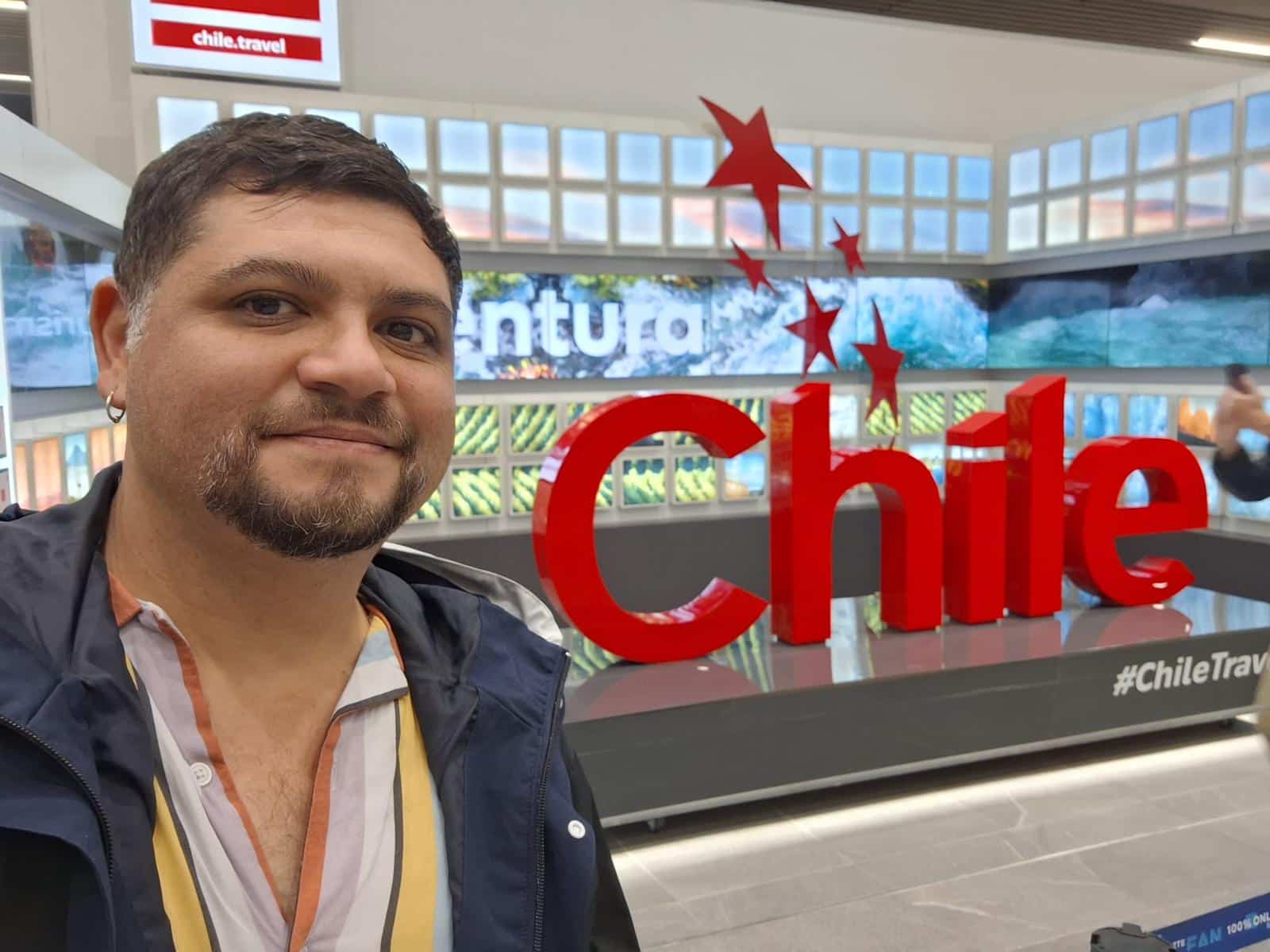
Taking advantage of this event on the calendar, AsF has spoken about Archives, Human Rights and Climate Change with Claudio Ogass Bilbao, co-chair of the Climate Change Working Group of the International Council on Archives (CCWG-ICA) and doctoral student in Archive Studies at the University of Liverpool. His doctoral thesis deals with the relationship between the national archive and the Chilean state, in order to understand and highlight the feeling of abandonment of Chilean institutions with respect to institutional and community archives. In addition, he has studied the problem of climate change from a Latin American perspective to propose more ecological and resilient archives.

An archival look at the climate cave


AsF Communication: You consider yourself an “activist archivist.” What do you think archival activism consists of? What does it mean to you?

Claudio Ogass Bilbao : I call myself an activist archivist, since my research and actions aim to drive social and political transformations to improve the precarious situation of archives in Chile and Latin America.

In this sense, I conceive of my main studies as a strategy within archival activism , because I turn to the past not to recover it with the intention of museographic admiration or to preserve it inertly, but so that the archival community can use it as a resource to improve the present and create a better future. There are so many long-standing problems in Latin America that I look to the past and analyze archival history as a source of experiences from the present. Some authors – such as the Canadian archivist Terry Cook – have proposed that the past is our prologue. I would add that the past is also our archive. There are the dreams, hopes, desires and failed projects of our predecessors, which serve as experience to formulate and design ideas, plans, arguments and organizations to create, with the strength of history and memory, an archival institutionality and policy that allows the current archival community to develop its full creative and intellectual potential and improve our activism strategies in the present, uniting the demands of the past with those of the present.

AsF Comunicación : How is your doctoral thesis related to human rights and archives?

Claudio Ogass Bilbao : This is a challenging question. My doctoral thesis aims to comparatively analyze the activity plans to modernize the National Archive of Chile promoted during the administrations of two national conservatives: Juan Eyzaguirre Escobar (1962-1971) and Claudio Vidal Lazo (1971-1973). It is temporally located in a political moment in the country described by historiography as the “era of global planning”, where two democratic and revolutionary governments – the Christian Democracy and the Popular Unity – tried to promote political agendas discussed and sanctioned in government programs in which planning from the State was very important to modernize the country.

This national context coincides with a period in the institutional history of the National Archive in which two directors, with very different work and professional trajectories, promoted demands to build a modern and efficient National Archive that would respond to the needs of the State and to the constraints of the law that mandated the preservation of administrative and historical documents since 1927. Both directors sought an independent building, the creation of regional archives, and the promulgation of an archives law that lived up to the ideas of their time. From an activist perspective, it is interesting to explain and recover the trajectory and content of these archival failures in order to visualize how these plans are linked to the present and to evaluate to what extent past demands are valid.

From an academic perspective, the emphasis of the thesis lies in reconstructing and analyzing the official communication of the directors with the state agencies to explain these failures of the past. The intersection of memoirs, letters and official documents allows us to analyze the arguments used by the directors to promote their demands and, together, the content and frequency of the State’s responses. In this way, we can learn about the State’s archival thinking on archives and demonstrate the State’s lack of concern and disinterest in the National Archive, as well as the lack of priority it gave to public archives. During the decades of the 1960s and 1970s, the institutional problems were the same and were never resolved due to a lack of state will, despite the constant efforts of its directors.

In this sense, the thesis seeks to place the State in the dock of the Chilean archival court to judge what its role was in these failures: did they facilitate modernization or hinder it?

From reading the documents it is possible to reconstruct the chronologies of the procedures with all the institutions with which the directors Juan Eyzaguirre Escobar and Claudio Vidal Lazo interacted to obtain an independent building. Between 1927 and 1984, the National Archive occupied the same institutional space as the National Library and could not comply with the law due to lack of space. This lack of space is what mobilizes the need for the creation of Regional Archives, as well as the promulgation of a legal and regulatory framework. The directors are not only bureaucrats who guard the past, but they try to be architects of the national archival future. Their vision was to create public policies on which value could be generated around the archives. They were not an inert actor, but an active agent within the narrow margins of state institutionality.

AsF Comunicación: Were human rights a priority for the directors of the National Archive of Chile during the period in which they were directors?

Claudio Ogass: The relationship with human rights is not explicit. Neither of the two directors mentions this issue in the documents nor does it use it as an argument before the State to achieve their demands for building, regionalization or reform. In any case, it is possible to infer that there is a concern to preserve the heritage and make it available for use by different audiences. In this sense, it is an interesting hypothesis to propose that there has been a concern for the right of access to information since the 1960s on the part of the national archival bureaucracy. The idea of ​​creating regional archives aims to promote regional history and activate research from universities, promoting regional culture and collective and individual identity.

Furthermore, now that you mention this question, an interesting aspect to highlight is that Director Eyzaguirre launched the first campaign to generate public awareness about the need to properly preserve documents and have a suitable building of his own. In 1962, the General Directorate of Libraries, Archives and Museums (DIBAM) of the Ministry of Public Education – the body on which the National Archives depended – removed warehouses from the National Archives, aggravating the historic space crisis that had plagued the body since 1927. This provoked the director’s defense, who invited journalists to make two reports showing the disaster that this measure caused, added to a fire in October 1962. This can be considered a strategy of “archival advocacy”, that is, the defense and promotion of the importance of archives to audiences other than those who are convinced of their administrative, political and cultural value.


In conclusion, the discourse of human rights during the decades of the 1960s and 1970s did not have a great reception in the thought and language of the directors directly. Its defense did not penetrate the level of the State archival bureaucracy, marginal and peripheral within the State organizational chart. As today, the archives – and, especially, the National Archives – were still seen as a place of research for historians (mainly men) and a repository of the State’s heritage. However, the expansion of access is present there, implicitly, and, therefore, requires greater research.

AsF Comunicació : One of your lines of research and work is climate change. How can we address, at an archival level, the challenge posed by the climate crisis?

Claudio Ogass Bilbao : The first step is to recognize that climate change is a global crisis and a threat that directly affects all areas. It is an inevitable and undeniable reality, supported by the scientific world. A recent example has been DANA in Valencia, but we have many other examples, such as the floods in Copiapó in 2015 and 2017, or hurricanes Irma and Maria in 2017 in Puerto Rico. These phenomena have made us realize the weakness of archives in the face of this threat.

Climate change is a risk multiplier, increasing the types of hazards and their frequency and increasing the levels of vulnerability of archives and the uncertainty of the archival community regarding the future. Adding to the traditional shortcomings of archives.

The climate emergency challenges the archival sector from two perspectives: first, as a threat to the existence, continuity and integrity of archives; and second, as a test for the mission of archival professionals, which is to ensure that different generations of users can use and benefit from archives. In this sense, it is necessary to reconceptualize the professional mission, because, if we want to preserve archives as platforms for intergenerational communication , we must also preserve the planet.

One way to address this problem is through joint and networked work to address and adapt to climate change. The archival community, since the founding of the International Council on Archives (ICA) in 1948, has come a long way in this direction, always promoting an ethical and collaborative spirit. In my view, there are four key steps in which archival science can contribute responsibly:

    • Research and adaptation: Institutional adaptation strategies need to be developed to move towards more resilient archives. An interesting practice is that of the interdisciplinary group “Map and Investigate Climate Change to Protect Archives”, which uses georeferencing and risk maps to project future challenges.
    • Archives as agents of change: We must be aware that archives are also polluting agents and have an influence on the climate shadow. Although we do not yet know the exact impact of the sector, we can begin to take ecological actions and raise awareness in other professional sectors.
    • Review of the professional mission : We need to redefine our mission taking into account not only the protection of documentary heritage, but also the preservation of the planet.
    • Archives as tools for awareness: All archives can contribute to documenting climate change, locating significant documents to promote environmental awareness, and countering climate denial. This includes the creation of catalogs, indexes, and outreach activities.

AsF Communication : To implement this plan, are we on time or are we already late?

Claudio Ogass: The application of these ideas must be done from an affective responsibility, considering the workloads and context of each archive. The responsibility of a National Archive, with a legal mandate and a stable budget, is not the same as that of a community archive, where the work is done from love and personal commitment. This fact reinforces the importance of collaboration and solidarity within the archival collective. I need to learn from archives that have reacted to disasters and create joint strategies.

Climate change does not respect borders. As an archivist said at a conference in Girona, “your flood is my flood.” Furthermore, solidarity can be an antidote – small but necessary – to neoliberalism and the individualistic tendency that promotes “campi qui puoi”.

AsF Comunicació: Collaboration must come from interdisciplinary networks. What opportunities do you see for collaboration between archivists and specialists in climate change and human rights?

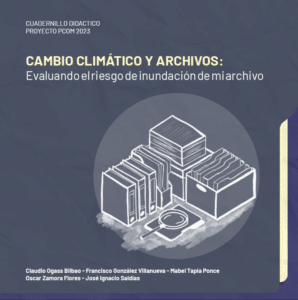
Claudio Ogass: The transversality of climate change affects all aspects. It is a multifaceted problem in which the role of archivists is essential. To promote the fight against climate change, an interdisciplinary response is vital, as shown by the project “Mapear e Investigar el canvi climático per protegre els archivos”, winner of the PCOM-ICA 2023 Program. This project, made up of geologists, archivists, designers and preventionists from Chile and Mexico, seeks to fill a gap in research on climate change in Latin America. Among the actions carried out are a diagnosis of climate perceptions and actions in the National Archives, the analysis of emergency plans and a risk mapping in cities such as Copiapó and Valdivia. A clear conclusion is that Latin American archives are not prepared to face this threat, since no emergency plan mentions climate change.

An Archival Look at Climate Change

These shortcomings highlight the need for interdisciplinary work and the link between activism and research. Evidence-based research gives us the strength to make demands and generate more realistic and contextual solutions.

Claudio Ogas Bilbao

Co-chair of the Climate Change Working Group of the International Council on Archives (CCWG-ICA) and PhD candidate in Archive Studies at the University of Liverpool

The memory of the Casal

The memory of the Casal

The intervention of Archivists Without Borders in the archive of the Casal Català de Tolosa (2023)

Intervention in the archive of the Casal Català of Toulouse

Last July 2023, a delegation from Archivists Without Borders (AsF) carried out an intervention in the archive of the Casal Català de Tolosa de Llenguadoc, a prominent association of Catalan cultural actions abroad since the exile of the 1940s, after the Republican defeat of 1939. AsF has maintained contact with those responsible for this entity since 2018 to analyze the value of its documentary collection and advise its managers with a view to its preservation and its suitability for various lines of study.

These contacts, temporarily cut off due to the pandemic, revealed not only an internal interest in this documentation for the knowledge of the organization itself and its members and the human and cultural heritage accumulated throughout its existence, as well as for the good management of its data, assets and legal needs. A public interest was also evident in considering this documentation as an archive in its own right, and treated for this purpose and placed at the service of public consultation. And although the Casal was born in 1954, a considerable part of the correspondence and documentation that forms part of its archive transcends this temporal boundary and is a testament to the vicissitudes of the first years of exile in France, and, therefore, to the political, economic, cultural and sentimental motivations of those who would later found the Casal, as well as those of many others who, having embarked on the path to France, came into contact with the members of the Casal and found support or guidance there.

All these assessments motivated a reconnaissance and diagnostic visit in 2022, a milestone from which the concretization of a more exhaustive intervention on the archive by two AsF cooperators was planned in 2023, which would become a reality thanks to the support of a subsidy from the Department of Foreign Action and European Union of the Generalitat of Catalonia and the reciprocity of the members of the Casal. The need for this intervention was based on the observation of the problems of this archive; problems, on the other hand, common in popular associations: although their legacy, crystallized in a not inconsiderable documentary volume –up to 13 linear meters of paper but also of photography–, has been possible thanks to the voluntary dedication of its members, very often this has been reflected in a diversity of criteria in the organization and installation of the documentation, usually without a knowledge of coherent archival methods, which do not achieve an order of the archive that makes it possible to consult it successfully and to preserve it safely.

The lines of action, then, were clear: the emptying of the archive, the elimination of everything external to the documentary collection, without authentic or representative value for the entity; and the study of the documentation to determine a classification by functions and subfunctions according to the model that is the Classification Table for cultural entities and associations of the Directorate General of Cultural Heritage [1] . Based on this organizational scheme, the determination of the main documentary series and their inventory, with the deepest possible level of description based on the time available, and the installation of the documentation already processed, grouped in folders and stored in labeled archive boxes, under the control of a topographical code.

These works, carried out over ten days, resulted in the installation of an archive of 9.3 linear meters, consisting of 93 regular and topographic installation units and linked in a classification table that gave the entity the key to access the main areas of its documentary collection, such as all the documentation relating to its constitution and internal management, accounting, and correspondence. Furthermore, even in the case of some specific documentary series, priority was given to deepening the description and organization of the documentation, as is the case with everything related to the Sardana Gathering, the most emblematic activity of the Casal and continued over time, or the Casal Bulletin, published since 1963.

The general state of disorder of the archive before the intervention made it necessary to devote most of the time to the classification by large documentary areas and to guarantee an adequate installation, highlighting some points of interest, but without achieving the complete description and arrangement of all the documentation. It would be desirable for this objective to be the focus of a second intervention in this archive.

Meanwhile, the visit of Archivers without Borders to the Casal Català de Tolosa will have provided the entity with a global knowledge of its documentary heritage, its scope and its gaps and unknowns; a knowledge that may attract its study, and that will reinforce the awareness of its value: a thread that links the adventures of the first generation of Catalan exiles with those of new generations of expatriates who have rediscovered a shared fund in the memory of the Casal.

[1] Cobo Barri, E., Pedrals Costa, X., Vilarrúbias Cuadras, Yáñez Navarro, M., (2023). Support protocol for the archives of cultural entities and associations. Archiving and document management. Tools , 11.

AN ANTHROPOLOGICAL PERSPECTIVE FOR ARCHIVISTRY AND INTERNATIONAL COOPERATION PROJECTS IN ARCHIVES

AN ANTHROPOLOGICAL PERSPECTIVE FOR ARCHIVISTRY AND INTERNATIONAL COOPERATION PROJECTS IN ARCHIVES

Archival science is in a very encouraging moment of professional and academic expansion, marked mainly by dialogue with information and computer sciences and, therefore, in a scenario of greater standardization at an international level. However, it is essential to cultivate critical thinking and claim the opportunities that the social sciences can also offer in approaching and treating the object of study itself. Because what happens when the perceptions, needs and expectations that other societies have in relation to their archives do not fit with the way of understanding and doing things of “standardized” archival science? How can we as professionals consider helping other communities organize and manage their archives if we do not take into account what is socially and culturally important to them, and in what terms they want to relate to them?

Research and various work experiences in the social field, particularly in Australia, Canada, the United States and Latin America, have already been able to demonstrate that there is much more sociocultural diversity around archives than we might think, in the face of which a homogeneous or standard conception of the discipline and an indiscriminate application of its scientific principles is not only not viable, but is also highly problematic.

Although, due to the origin and academic background of most archival professionals, there is already an awareness of the social value of archives, of their importance for historical memory or for the defense of human rights, the truth is that there is more than all this; that archives can mean and can be constituted in many ways depending on the society or community to which we refer. Current professional models and standards are not prepared to embrace the fact that, for example, some communities can establish emotional, spiritual or more symbolic links with their archives, or that there are particular archival systems and traditions that are based on other ways of conceiving documents, cultural property or the preservation of memory.

International cooperation projects in the field of archives are particularly paradigmatic in this sense, because they allow us to see very clearly to what extent the application of archival theory and principles works in different social realities. For example, from the cooperation project of Archivists without Borders with the National Archives of the Sahrawi Arab Democratic Republic, which I have had the opportunity to analyze, many lessons can be learned regarding the fit of one’s own knowledge and professional practices into local and territorial realities, both particular, as well as the need, noted by the cooperation workers themselves who have participated in it over the years, to know the population with which one works, beyond the specific situation of the archives and documentation, or the externally perceived needs for document management.

In this sense, anthropology and its research method, ethnography, are tools that could serve us for sociocultural awareness and for the presentation of some critical reflections on the profession, not only to understand people and diverse archival cultures, but also to think about how we do what we do and why we do it. Specifically, some ethnographic exercises could be incorporated into cooperation projects, that is, attention to and understanding of social realities, in order to design more appropriate, effective and integrated interventions in each context. For example, we could start by paying more attention to the sociocultural aspects of the population in the previous phase of prospecting the collections and in the design of the projects, or even create multidisciplinary teams that have the capacity to work on the same project from different perspectives and with greater depth.

Ultimately, archival science should be understood as a means for societies to archive themselves in the most coherent way, and not as a standard application practice. Understanding that there are different ways of doing things and giving them space is important, and in fact, this flexibility is not incompatible with maintaining rigor, quality and the application of good practices. Understanding the producers of documentation and the social worlds that surround archives is fundamental to proposing truly efficient and appropriate documentation management, and to ensure that the purposes of archival science are met in the terms in which each community experiences and conceives it.

THE ARCHIVES IN MEMORY POLICIES. Some learnings from the Colombian experience.

THE ARCHIVES IN MEMORY POLICIES. Some learnings from the Colombian experience.

During the last 20 years, the international discourse on human rights has dealt with an essential question for the clarification of crimes against humanity committed in repressive regimes and armed conflicts: what measures must be implemented to safeguard and widely use the files that testify to violations of human rights? The international principles of the fight against impunity -adopted in 1998 and updated in 2005, the reports of the United Nations special rapporteur for the right to truth -especially its report of 2015-, as well as the Instruments of the State of Law of the United Nations High Commissioner for Human Rights [i] have highlighted that the duty rests on the states to remember, and in their fulfillment, the obligation to preserve and establish the most extensive conditions for the public knowledge of the documentary and testimonial legacy of the towns. These legal referents invite the states to consider transitional mechanisms, such as memory laws, an opportunity to implement the highest standards for the protection, access and social dissemination of archives. Truth-seeking policies must be accompanied by archival policies designed from a human rights perspective.

Despite the clarity of these invitations, international experience, and in particular, the experience of the transitional mechanisms in Colombia shows that harmonizing and bringing into dialogue memory policies and archive policies is a task with many obstacles. Thus, although one of the main principles in this relationship between archives and memory policies is that research organizations of the past must have free access to documentation and public information, the experience of the Commission for the Clarification of Truth, Coexistence and Reconciliation (CEV) in Colombia highlights the barriers that persist in this field. This body, the result of the agreements signed by the Colombian government and the Revolutionary Armed Forces of Colombia (FARC-EP) in 2016, delivered its final report on June 28, 2022, and with its annexes a document entitled “Experience of the Truth Clarification Commission to access public information” [ii] . Colombia has a General Law on Archives, a Law on Transparency and Access to Public Information, a Law on Victims and Land Restitution, and however, the CEV faced the reluctance of some state entities to give access to public documentation, the lack of archival instruments for information searches on human rights violations; it also faced the unjustified forwarding of requests for information to other state entities, and the ignorance of the legal deadlines for responding to requests for access, among other problems. In short, access to state archives remains tortuous, not only for victims seeking truth and justice, but also for public entities empowered to investigate the impacts of war.

The experience of the CEV recalls the findings of another entity, the Centro Nacional de Memoria Histórica (CNMH), an organization created in 2011 and in charge of launching an Archive on the memories of the Colombian armed conflict. Between 2013 and 2017, this entity set itself the task of building a policy for the archives on human rights violations, and for this, dialogued with social organizations and public officials from various regions of Colombia. In its diagnosis, the CNMH found that problems such as threats to social leaders who sought information about what happened, the lack of training of public officials in human rights, the lack of psychosocial tools for the attention of victims, the absence of training programs on the treatment of archives and the precariousness of the infrastructures – public and civil society – hindered access and preservation of the documentary and testimonial traces of the armed confrontation [iii] . The realities encountered by these institutions show that policies and the management of archives in public institutions can facilitate and also hinder knowledge of the impacts of violence, and also decisively affect the possibilities of demanding human rights, especially of victims and their representatives.

To complicate this map of challenges in memory policies, it is important to add that, in the Colombian context, entities such as the CNMH and the CEV have produced public reports that have dealt with matters such as the effects of violence in the various regions, the effects on populations such as peasants, indigenous people, Afro-Colombian communities, boys, girls, adolescents, the LGBTI population, the effects on political participation, among other dimensions of the armed conflict. Despite this work, archive policies that facilitate and stimulate access are still necessary, not only to public documentation in general, but to the archives formed by these entities in their research work. In societies that aspire to overcome the profound social, cultural and psychosocial impacts of violence, the challenge consists, not only in the collection of documents and testimonies, but also in the public visibility of thousands of stories that, due to the violence, have not been able to come to light. In fact, a large part of the effort of memory managers such as human rights organizations, family associations seeks to break the silence that weighs on the pains that society has experienced, and with that, to overcome the environment of impunity that makes it easier for violent events to be repeated.

Obstacles to access to archives in the experience of Colombia, states that the issuance of legal tools -laws, protocols and institutional circulars- on these topics is necessary, but not sufficient to achieve coordination between memory policies and archive policies. In other words, the path between the rules and the daily life of state entities is long. To overcome these gaps, the real decision to promote changes in the institutional culture is required, as well as public debate and citizen oversight so that the principles adopted in international human rights laws and norms are appropriated and fulfilled within the institution. One of the most visible needs, for example, is to publicly position the idea that, the search for the truth, the critical analysis of what has been lived so that the atrocities of the past are not repeated, demands that the generations, present and future, have the possibility to know and interrogate both the reports of the specialized bodies and the history that is contained in the documents, testimonies and other materials that have been collected by the research bodies. The public discussion on access to archives for the recovery of historical memory must touch, among other aspects: a) the effective conditions for its knowledge and dissemination, especially for victims and organizations of clarification; b) the regime of access to documents and testimonies collected by investigative bodies; and c) the policies required so that the national archive systems work in a coordinated manner in the preservation of this legacy when the documents and testimonies are guarded by non-state memory managers, that is, by people or communities that can contribute to the clarification of the past.

Faced with these issues, it is worth saying that Colombia and Spain are experiencing special moments. On the one hand, Colombia is witnessing a moment in which a relaunch of peace policies is announced, and on the other hand, Spanish society is facing the debate on the implications of the Law of Democratic Memory. I hope that these times are the opportunity for archive policies to become visible as a strategic, core field of political transitions in these countries, and for public institutions, think tanks, and civil society organizations to engage in fruitful dialogues on the policies and measures necessary to safeguard the value of archives as sources of social memory that promotes respect for human rights.


[and] High Commissioner for the United Nations for Human Rights (OHCHR) 2015. Instruments of the state of law for societies that have come out of a conflict: archives. Available at https://www.ohchr.org/sites/default/files/Documents/Publications/HR_PUB_14_4_Archives_sp.pdf

[ii] Commission for the Clarification of Truth, Coexistence and Non-Repetition (CEV) (2022). Experience of the Commission to access public information. Document available at https://www.comisiondelaverdad.co/experiencia-de-la-comision-para-acceder-informacion-publica

[iii] National Historical Center (CNMH) (2017). The process of forming the Archives of Human Rights of the CNMH and the construction of the Public Policy of Archives of Human Rights, Historical Memory and Armed Conflict: diagnosis and proposals of civil society and public institutions. In Public Policy of Archives of Human Rights, Historical Memory and Armed Conflict. Available at https://www.centrodememoriahistorica.gov.co/descargas/politica-publica-archivo-ddhh.pdf Pages 120-125 .

arxivers uses Accessibility Checker to monitor our website's accessibility. Read our Accessibility Policy.